The Uranium Card
India built part of its energy future on Kazakh uranium. The trouble is that the fuel, like almost everything else in Central Asia, leaves through somebody else's hands.
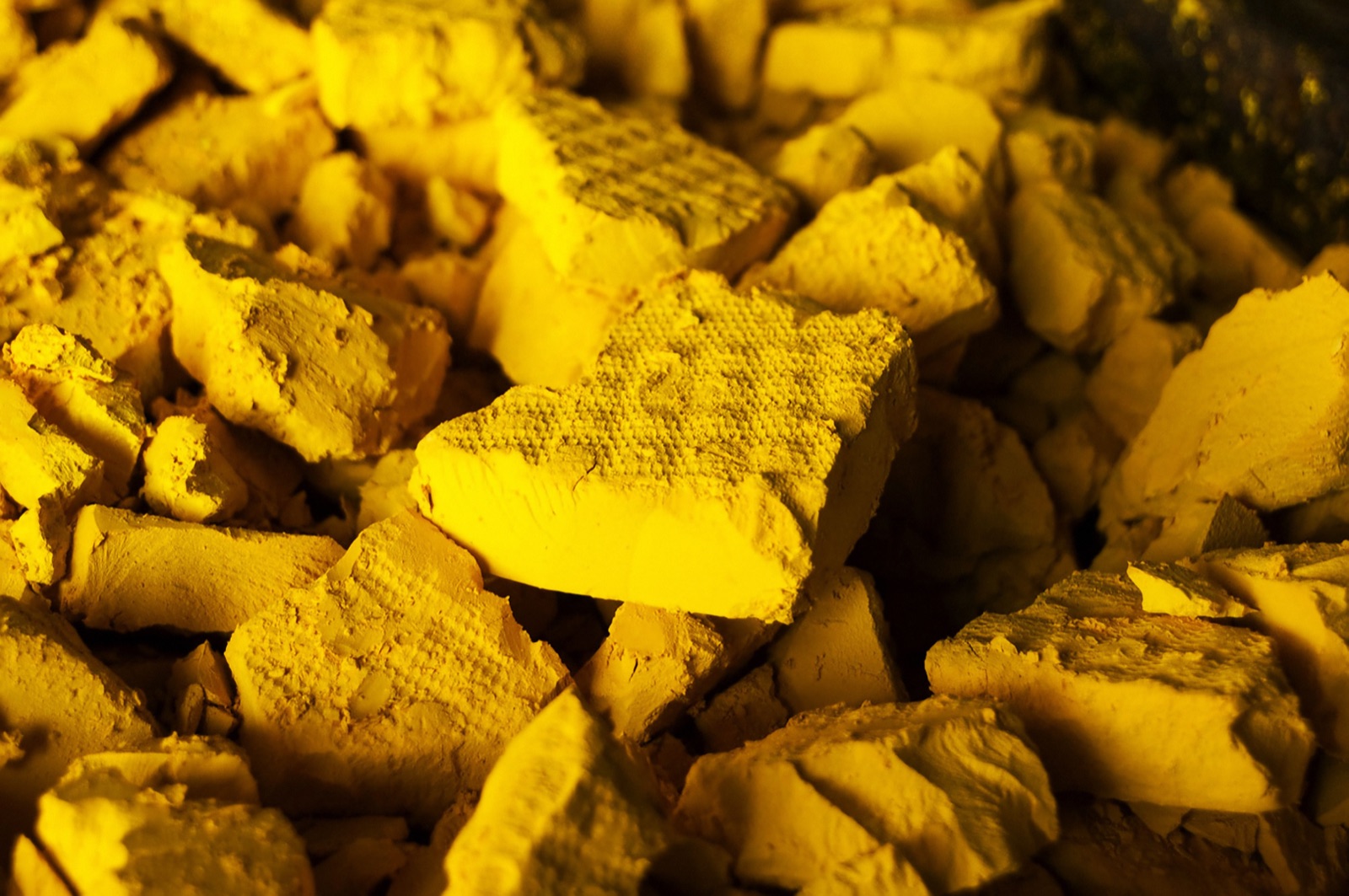
Of all the things India buys from Central Asia, uranium is the one that matters most by the kilogram and is talked about least. Kazakhstan is the largest producer of uranium on earth, responsible for something close to 40 percent of global mine output and sitting on roughly 14 percent of the world's reserves, and India, a country with an ambitious civil-nuclear programme and very little uranium of its own, was always going to be a customer. It became one formally in 2009, with a civil-nuclear cooperation agreement, deepened in 2011, and in 2015 New Delhi signed a long-term contract with Kazatomprom, the Kazakh state company, for the supply of natural uranium concentrate. On paper it is one of the cleaner success stories in the India–Central Asia relationship: a strategic commodity, a willing seller, a contract that has been renewed rather than abandoned.
As far as the commodity goes, the relationship works, and I will concede that. Bilateral trade with Kazakhstan is modest (around 900 million dollars in 2024, which makes Kazakhstan India's largest trading partner in the region and tells you how thin the regional trade is to begin with), but the uranium itself has been reliable, and Kazakhstan has been a steadier supplier than the politics around it would suggest. The difficulty is not the seller. The difficulty is who stands between the seller and the buyer.
Uranium does not simply walk out of the Kazakh steppe and onto a ship bound for India. The Russian state nuclear company, Rosatom, holds an interest of roughly a quarter in Kazakhstan's uranium production, and a great deal of what Kazakhstan mines is processed, converted or moved through Russian facilities and Russian territory on its way to the wider world. So the supply chain that ends in an Indian reactor begins in a Kazakh mine and passes, somewhere in the middle, through a Russian hand. In calm years this is invisible. In a year of war, sanctions and contested routes, it is the whole story. The uranium is Kazakh; the valve is in Moscow.
This is the position of a household that has carefully moved its savings into a sound foreign bank, only to discover that every transfer must clear through a third party it does not control and cannot replace. The money is real and the bank is solvent, and none of that helps on the morning the intermediary decides to be slow, or expensive, or unavailable. India has the contract. What it does not fully have is the road.
The 2026 war has not switched off the uranium route the way it switched off Chabahar, and I am not going to pretend that it has. Uranium does not sail through the Strait of Hormuz, and a piece that claimed the blockade had darkened India's reactors would simply be wrong. But the war has done something subtler and, in the long run, more important: it has reminded every buyer in Eurasia that a supply chain running through a belligerent or a sanctioned state is a supply chain held at someone else's pleasure. India has spent three years learning this lesson with oil. It would be strange to learn it with oil and forget it with uranium.
India's answer so far has been to do more of what already works (buy the commodity, sign the contracts, deepen the civil-nuclear relationship) without confronting the structural fact underneath it. That is understandable, because the alternatives are hard. A uranium route to India that avoided Russia altogether would have to run south, through the same Central Asian geography that every other corridor has found impassable, and out through an Iran that is now at war. The cleanest fuel India imports is trapped behind the same map as the dirtiest barrel of oil.
I am not saying India should treat Kazakhstan as an unreliable partner, because it has not been one, and the uranium has kept coming. I am saying that a strategic commodity is only as secure as the least friendly country it has to cross, and on present arrangements that country is not Kazakhstan. India holds a strong card in the uranium relationship. It is worth remembering whose table it is being played on.