The Bridge Was Built on Iran
India spent twenty-five years constructing an overland route to Central Asia that carefully avoided Pakistan. The one country it could not avoid was Iran. The 2026 war has turned that into the most expensive design decision in recent Indian foreign policy.
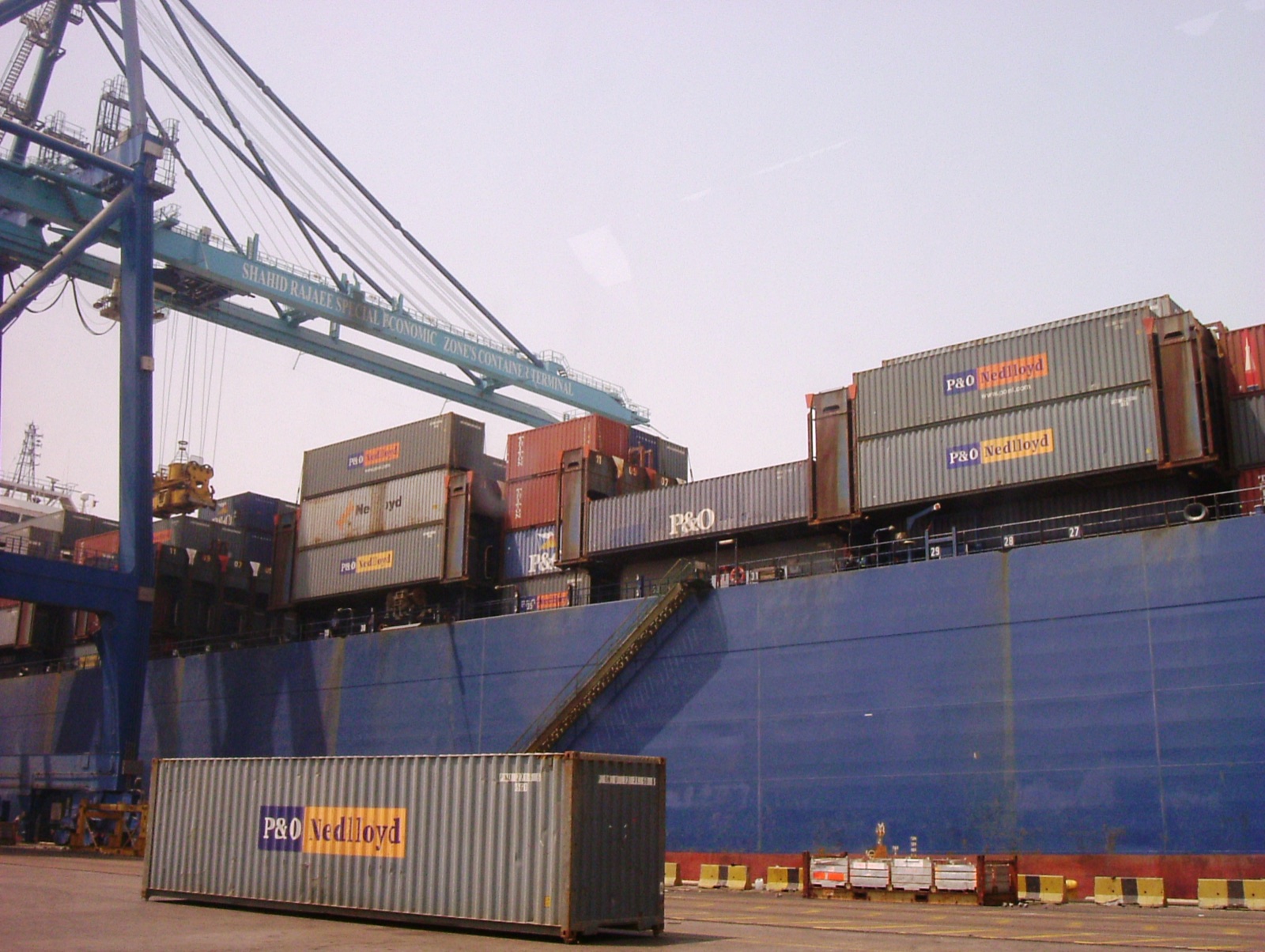
India has been trying to reach Central Asia by land since the year 2000, and the entire structure of that effort rests on a country it does not control. The International North–South Transport Corridor was signed in St Petersburg that year by India, Russia and Iran. It runs around 7,200 kilometres, and on paper it is a genuinely good idea: roughly 30 percent cheaper and 40 percent faster than the long haul through the Suez Canal. Chabahar, the port India has been developing on Iran's south-eastern coast, with a ten-year operating contract signed in 2024 and the Shahid Beheshti terminal as its centrepiece, was the southern mouth of that corridor. It answered a very specific problem: the short land route from India to Central Asia runs through Pakistan, and Pakistan was never going to open it. So India built around Pakistan. The difficulty is that building around Pakistan meant building through Iran, and that is the bill that has now arrived.
It is worth being precise about how much had been built, because the loss is not theoretical. India acceded to the Ashgabat Agreement in 2018, joined the TIR customs convention that lets a sealed container cross several borders on a single document, extended a one-billion-dollar line of credit for connectivity projects in the region in 2020, and convened the first India–Central Asia Joint Working Group on Chabahar in Mumbai in April 2023. The contract to run the Shahid Beheshti terminal for ten years followed in 2024. As late as March 2025, India sent its first cargo from Mundra in Gujarat up through Iran's Bandar Abbas and into Central Asia along the corridor's eastern branch, and that November a train carrying sixty-two containers covered some 900 kilometres from the corridor's northern reaches to a dry port near Tehran in twelve days. Twenty-five years of patient assembly, and the thing was finally moving. That was the state of play a little more than a year ago.
The logic held for all twenty-five of those years, and I will concede that much. Iran was sanctioned but functional. Chabahar even carried its own American waiver, because Washington preferred an India-run port in the region to a Chinese one. None of that survived the spring. The war that began on 28 February 2026, along with the blockade of the Strait of Hormuz that came with it, has achieved what a decade of ordinary sanctions never managed. There is an irony here worth dwelling on, because Chabahar was deliberately built east of the Strait of Hormuz, on the open Gulf of Oman, precisely so that a closure of the strait could never strangle it. Bypassing Hormuz was the entire point of the place. It has been strangled anyway, and the blow came not through the strait it was designed to avoid but from two directions it was not: Washington has revoked the sanctions waiver that protected the port, and the American naval blockade has widened well beyond Hormuz itself. Brent crossed 100 dollars and touched 119.50 as Iran's effective closure of the strait pulled close to a fifth of the world's oil off the market, and the port that was meant to be India's doorway remains, by ship-tracking data, technically open but moving almost nothing of size. The detail that should worry Delhi most is that the eastern branch India turned to in March, the one routed through Kazakhstan and Turkmenistan, still comes out at an Iranian port at the end. The workaround and the thing it was working around share the same exit.
A trade corridor with one irreplaceable country in the middle is not really a corridor; it is a series circuit, and a series circuit has the unhelpful property of failing completely the moment any single element fails. Ten bulbs wired in series will light a room right up until one filament breaks, and then one is left in the dark, working out which of the ten to blame. India wired its entire Central Asia connectivity policy in series through Iran, every branch of it, and the filament has broken.
The closure would matter less if no one else were moving, but someone is. In early February 2026, within weeks of the war beginning, President Tokayev of Kazakhstan made the first state visit to Islamabad in twenty-three years, and President Mirziyoyev of Uzbekistan followed. Both were given Pakistan's highest civilian honour, and both signed dozens of agreements on trade and connectivity. Pakistan and Uzbekistan are pressing ahead with a roughly 4.8-billion-dollar Uzbekistan–Afghanistan–Pakistan railway that Islamabad calls a game changer, and Aktau on the Caspian has signed a maritime understanding with Karachi. I am not saying Pakistan's offer is without problems, because an insurgency in Balochistan and a deteriorating relationship with the Taliban make Gwadar and the Afghan transit routes genuinely fragile. But the point stands: at the precise moment India's southern door slammed shut, its rival began advertising one of its own, and Central Asian leaders, who are nothing if not pragmatic, took the meeting.
I am not saying the Chabahar bet was wrong when India placed it. The only alternative overland route ran through Pakistan, and that was no alternative at all. I am saying that resting a twenty-five-year strategy on a single chokepoint, then a single country, then a single port inside that country, was always one war away from precisely this morning. And the stakes have risen, not fallen, in the years since the bet was placed. India has set itself a target of two trillion dollars in exports by 2030; it is trying to unwind a dependence on China that runs through almost every critical-minerals supply chain it has; and Central Asia is exactly where both of those ambitions point. The destination has not grown less important; the road to it has simply been cut. India's trade with Uzbekistan still sits at about 1.3 billion dollars in 2025, a figure both governments openly call well below potential; the Chabahar–Zahedan rail link that was meant to open this year is now an open question; and the corridor built to close that gap is the one now shut.
What India built was never quite a bridge to Central Asia. It was a bridge to Iran, with Central Asia visible on the far bank. The far bank has not moved. The bridge has.