Neutral on Paper
India is buying Russian crude, partnering Israel and the United States, and asking Iran for safe passage, all at the same time. Strategic autonomy is an elegant doctrine right up to the morning somebody runs a naval blockade.
India's position on the 2026 war is, in effect, that it does not have one, and for most of its history that has been both a defensible and a profitable place to stand. The doctrine has a name now, strategic autonomy, and a long pedigree running back to non-alignment. Its core is simple: India reserves the right to deal with everyone and to align with no one. In an ordinary year this is not merely respectable; it pays. India bought discounted Russian crude through the entire Ukraine war while remaining a defence and technology partner of the United States, and nobody forced it to choose. A blockade is not an ordinary year.
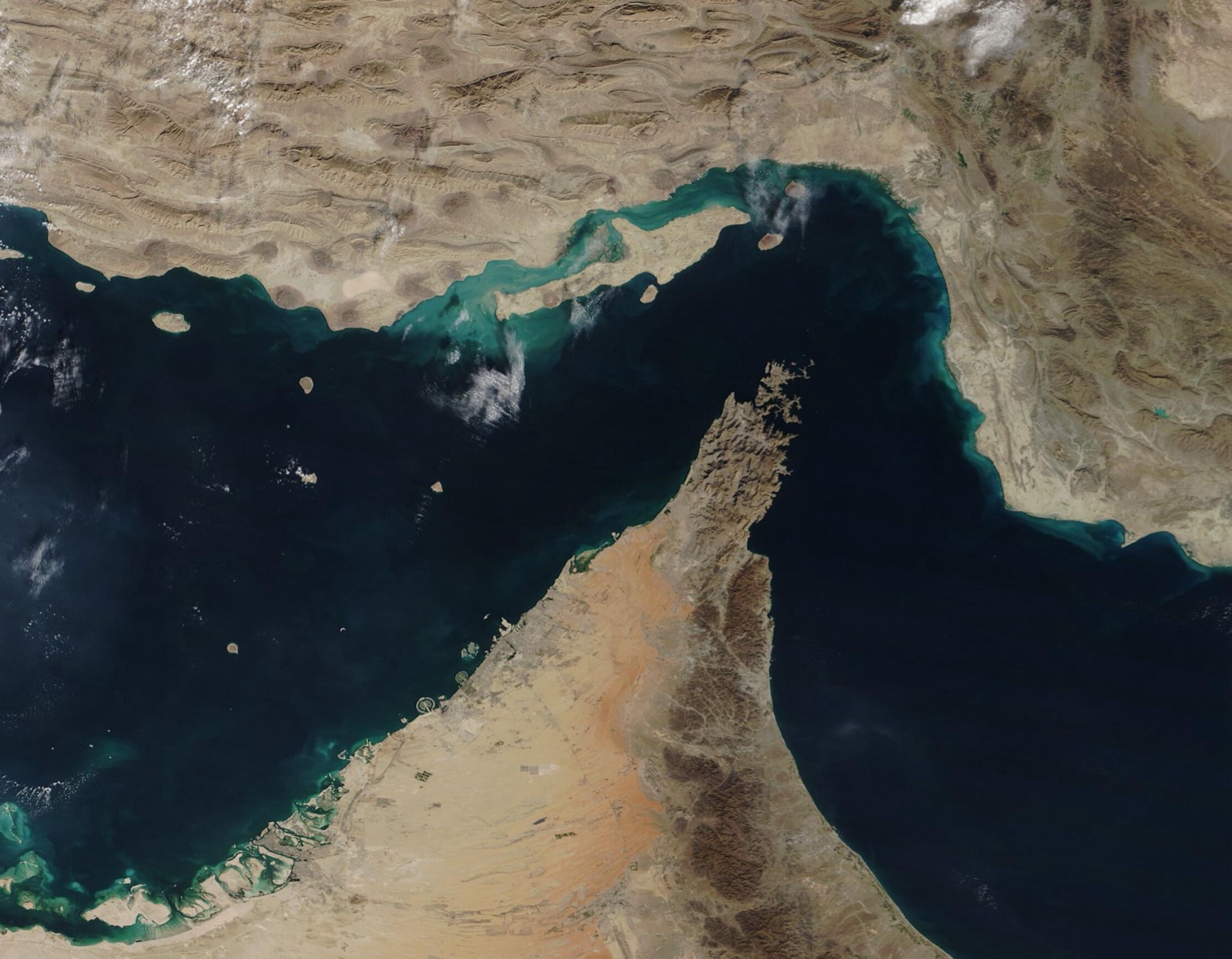
The neutrality has lasted longer than its critics predicted, and I will grant that. Even now, with American warships enforcing a blockade of Hormuz, India has neither condemned Iran nor endorsed Washington. It has instead opened a quiet channel with Tehran to let Indian-flagged tankers pass, which is neutrality of an admirably practical kind. The trouble is that the law does not score practical neutrality the way diplomacy does.
A naval blockade is one of the oldest belligerent rights in the law of armed conflict, and it comes with a defined character. To be lawful it must be declared, it must be effective, and it must be applied impartially to the vessels of all states, and that last requirement is the awkward one. A blockade that lets some neutrals through and stops others is not really a blockade; it is a sanctions regime with a navy attached. A neutral state's merchant ships do not automatically enjoy passage. They can be visited, searched and turned back, and cargo deemed to assist the war effort can be seized as contraband. The moment India negotiates a private exemption for its own tankers, it has stopped behaving as a neutral and started behaving as a state with an arrangement. Arrangements carry a price that is rarely written on the invoice, and the price tends to be paid later, in a currency the other party chooses.
The exposure runs past oil. Indian firms operate inside Chabahar, on Iranian soil, under a sanctions waiver that Washington has now withdrawn. The day that waiver lapsed, every Indian entity at the port stopped being a sanctioned-but-exempt operator and became simply a sanctioned operator. The only thing now standing between them and secondary American sanctions is Washington's present disinclination to enforce them, which is not a legal protection but a temperament, and a temperament can change between one news cycle and the next. The Strait itself sits in a legal grey zone that suits the party doing the blockading. Iran signed the UN Convention on the Law of the Sea in 1982 but never ratified it, and it has long argued that the transit-passage regime, which guarantees ships continuous passage through international straits, does not extend to the warships of states that are not parties to the Convention. The irony is that the United States has never ratified it either. Two of the three navies with the most at stake in Hormuz are arguing about a treaty neither has fully accepted, and India is trying to route its oil through the middle of that argument.
This is the diplomatic version of keeping one's savings in three different banks because no single one of them is trusted, which is prudent right up to the morning all three call in the overdraft on the same day. Diversification protects against one counterparty failing. It does nothing when the whole system seizes at once, and a regional war is precisely the event that makes every counterparty move in the same direction together.
Central Asia is running the same playbook, and it will sit the same examination. Kazakhstan and Uzbekistan have spent years perfecting a multi-vector foreign policy, balancing Russia, China, the West and now the Gulf, and this war is the first event to pull every one of those vectors the same way at once. Their room for manoeuvre is narrower than it looks. Around three-quarters of Kazakhstan's oil still leaves through Russian territory, which means Astana's neutrality on any question touching Moscow is constrained by a pipeline, not a principle. The same instinct shows up in the paperwork: the June 2025 India–Central Asia Joint Statement spoke of trade in national currencies and a working group on banking connectivity, and the foreign ministers of India and Uzbekistan chose to meet, of all places, on the sidelines of a Critical Minerals Ministerial in Washington in February 2026. In hindsight, the talk of settling trade outside the dollar reads less like financial housekeeping and more like a quiet rehearsal for a world in which dollar clearing cannot be relied upon. They were preparing for weather like this before it arrived.
I am not saying India should abandon strategic autonomy. It remains the right doctrine for a country of India's size, history and appetites. I am saying that autonomy is cheap in fair weather and expensive in a storm, and the bill for the 2026 storm has not yet been presented in full. Neutrality is a position. A blockade is a fact. Facts win.